The Wayfinder
Navigate Travel Like an Expert
There's a reason wellness retreats have grown from a niche indulgence into a genuine health strategy. Done well, they give you focused time to reflect, reset, and improve your overall wellbeing.
This guide covers what a wellness retreat actually is, how it differs from a spa weekend or resort stay, what it costs, how to choose the right one for your goals, what a typical few retreat looks like, and how to protect your investment once you've booked.
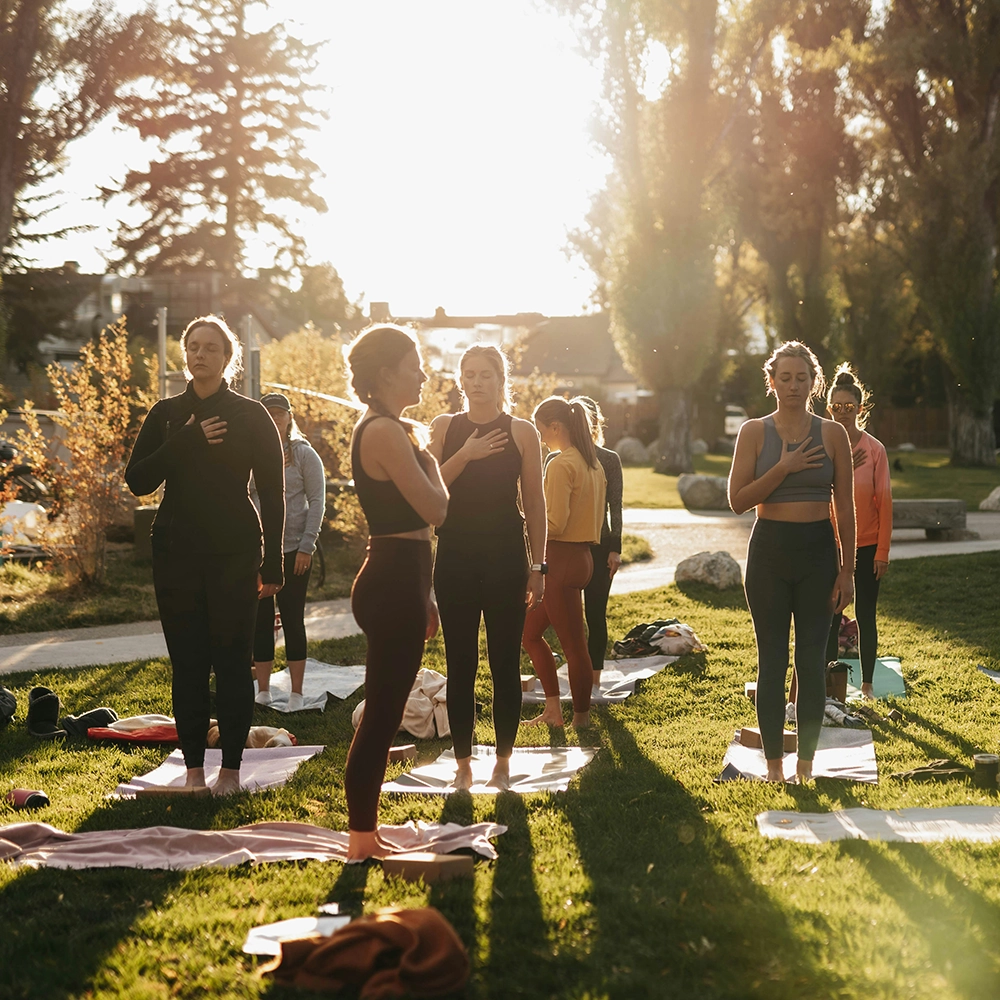
A wellness retreat is a structured, multi-day program built around a specific health or personal-growth goal — not just a relaxing trip with a nicer hotel room. The purpose of a wellness retreat is to learn a skill or grow through self-discovery in a way that makes you a healthier person. When you go, you intentionally seek activities for physical, psychological, or spiritual improvement, usually through workshops or guided sessions led by an expert. Based on your own goals, a retreat can help you decompress, connect with others or with nature, process difficult experiences, or build habits that support a healthier lifestyle long after you've come home.
These terms get used interchangeably, but they're actually not the same trip. Knowing the difference helps you set the right expectations (and buy the right insurance) for what you're actually booking.
Wellness retreat: A structured, goal-oriented program, usually multi-day, built around a specific outcome: stress reduction, a fitness reset, grief processing, a digital detox, etc. Retreats typically include scheduled workshops, group sessions, and expert-led instruction. Because the schedule is structured and often led by outside practitioners or facilities, retreats are more likely to require deposits, minimum stays, and firm cancellation policies than a typical hotel stay.
Wellness resort: A destination property — think a resort in Oman or Thailand — with wellness amenities (spa, fitness classes, healthy dining) available alongside standard resort life. You set your own schedule and can mix wellness activities with sightseeing, pool time, or free days. This kind of trip is typically more flexible and less structured.
Day spa or spa hotel: Focused on short-term relaxation and treatments (massages, facials, thermal baths) without an extended program or self-improvement curriculum. Usually the lowest-commitment and lowest-cost of the three, and often bookable with little or no deposit.
The more structured and prepaid the program, the more valuable travel insurance becomes. A flexible resort stay with a refundable room rate carries very different financial risk than a nonrefundable, seven-day retreat booked and paid for six months out.
Before you book anything, run your options through a short vetting process.
Start with your goal. Are you trying to unplug, heal from something specific, build a fitness habit, or just take a breather? Retreats are built around a single intention, so a mismatched goal is the most common reason people feel let down.
Vet the program itself. Some retreats make big promises about how they'll make you healthier, smarter, or more balanced without much evidence to back it up. Ask directly: What's the credentialing of the people leading sessions? What outcomes have past guests actually seen? A retreat that can't answer clearly has told you what you need to know.
Ask what happens if you need to cancel. Retreats are notorious for requiring deposits or full prepayment months in advance — get the cancellation policy in writing before you book. (More on this in the cost section below.)
Ask whether your health insurance actually covers you where the retreat is. This is the question people skip most often, and it matters more for a retreat than almost any other trip type. Many programs are in rural, remote, or international settings where your regular U.S. health plan may provide little or no coverage. If you're heading to a retreat overseas, travel medical insurance can fill the gap, helping cover the cost of care if you get sick or injured while your domestic plan isn't in play.
Consider the pace. One of the biggest challenges of a wellness retreat is slowing down. We tend to equate busyness with value, so unstructured downtime can feel like wasted time and money (even though it's often the entire point!) Retreats are a form of slow travel: instead of packing every hour, you immerse yourself in one place and one intention.
Wellness retreat pricing varies enormously by structure, location, and level of service, but here's an estimate:
Budget / community-style programs: roughly $500–$1,500 for a long weekend to a week, often shared accommodations and group-based programming.
Mid-range retreats: roughly $1,500–$4,000 for a week, with more individualized instruction and private or semi-private lodging.
Luxury / results-driven programs: $5,000 and up per week, with personalized coaching, advanced treatments, and premium accommodations.
What makes retreat pricing different from a typical hotel booking is the prepayment structure. Because retreats reserve limited spots, hire outside facilitators, and often operate at remote or exclusive properties, most require a non-refundable deposit and many require full payment weeks or months in advance, with little to no refund if your plans change.
That's a significant amount of money to have exposed with no way to get it back if you get sick, a family emergency comes up, or the retreat itself is canceled or altered. This is precisely the kind of prepaid, nonrefundable cost that Seven Corners Trip Protection is built to address. It can reimburse those prepaid expenses if you have to cancel for a covered reason. Before you hand over a deposit, it's worth checking what a trip protection plan would cost relative to what you'd stand to lose.
Programs vary widely, but here's what a typical five-day retreat structure might look like, so you know what you're signing up for:
Day 1 — Arrival: Check-in, welcome orientation, gentle group activity (often a sunset walk or restorative yoga), and a review of house rules (tech policy, meal times, quiet hours).
Day 2 — Foundation: Morning movement session (yoga, hike, or fitness class), midday workshop tied to the retreat's core theme, afternoon free time or a spa treatment, communal dinner.
Day 3 — Immersion: A full day built around the retreat's signature activity — this is often the most physically or emotionally demanding day, whether that's an intensive hike, an extended meditation sit, or a deep-tissue treatment schedule.
Day 4 — Integration: Lighter pace, individual reflection time, one-on-one coaching or consultation, group discussion to process what's come up.
Day 5 — Departure: Closing circle or workshop, take-home plan for sustaining habits, checkout.
Because Day 3 in particular often involves physical exertion in an unfamiliar environment, it's worth planning for that intensity — both physically and insurance-wise (see below).
Retreats built around physical activity (think hiking, intensive fitness training, surfing lessons, remote wilderness programs) carry a real, if often overlooked, risk of injury or illness. So do retreats set in remote locations, simply because they're farther from a hospital if something goes wrong. Even a "gentle" retreat can involve unfamiliar terrain, new physical activity, or a location with a different food and water supply than you're used to.
This is where it's worth thinking beyond the basics. If a retreat is in a remote area — a jungle lodge, a desert property, an island with limited medical facilities — and something happens that requires more advanced care than what's locally available, Seven Corners travel insurance can help cover accidental injuries and get you to an appropriate facility, or home, safely. It's not something most people think about when they're booking a yoga retreat, but it's exactly the kind of scenario this coverage exists for.
Once you've thought through the questions above, here are a handful of retreats worth researching further, organized by what you're looking for. As always, verify current programming, pricing, and cancellation policies directly with each operator before booking.
For solo travelers:
Pura Vida Adventures (Costa Rica) — week-long, all-inclusive surf and yoga retreat with women's-only options.
Girls’ Guide to the World — mindfulness coaching and group exploration in Spain, Nepal, Botswana, and more!
For couples:
Ojo Santa Fe (New Mexico) — private casitas, spring-fed thermal pools, complimentary fitness and meditation amenities for overnight guests.
Firelight Camps (New York) — glamping with direct access to Buttermilk Falls State Park.
For mental health & creativity:
Black Women Healing Retreats (Costa Rica and Jamaica) — trauma-informed wellness workshops for Black women.
Fogo Island Inn (Canada) — a reading retreat in partnership with Penguin Random House Canada.
For physical health:
Dolce Vitality (Italy) — body composition assessment, challenging treks, daily yoga and Pilates, massage, at Le Sirenuse in Positano.
Six Senses Zighy Bay (Oman) — high- and low-intensity training paired with recovery treatments and sleep coaching.
For relaxation:
Castle Hot Springs (Arizona) — mineral-rich hot springs and a full menu of farm-to-table cuisine.
Nové Lázně (Czechia) — historic spa hotel in Karlovy Vary.
For a digital detox:
Black Tomato's Get Lost (location undisclosed) — a fully off-grid, GPS-free adventure.
Miraval Austin (Texas) — tech-free property with equine-assisted wellness and sustainable farming programs.
For connecting with nature:
Kamalaya Koh Samui (Thailand) — holistic spa sanctuary with programs for sleep, stress, and emotional harmony.
Aqua Oceanfront Resort (Nicaragua) — eco-friendly tree house stays with beach and rainforest access.
A wellness retreat is an investment in your health, which makes it worth protecting the same way you'd protect any other significant trip cost. To recap:
Before you pay a deposit, know the cancellation policy and consider Trip Protection to cover nonrefundable prepaid costs if you need to cancel for a covered reason.
Before you travel, check whether your regular health plan covers you at your destination. If it doesn't, Travel Medical insurance can help fill that gap.
If your retreat is remote, physically demanding, or far from advanced medical care, both Trip Protection and Travel Medical plans can cover Emergency Accident & Sickness Medical Expenses and Medical Evacuation and Repatriation to protect you in case something goes wrong.
Whether you choose a quiet week ono a mountainside, a surf-and-yoga retreat by the coast, or a digital detox off grid, we hope it's everything you need and more. Self-care is worth doing well and worth protecting. If you’re headed on a wellness retreat and not sure which coverage is right for your getaway, talk with our licensed travel insurance agents today!
Did you enjoy this blog? Get more articles like it before anyone else when you subscribe to our monthly newsletter, The Wayfinder.
This website and various social media updates provided by Seven Corners contain content, information, articles, videos, and links to websites created by third parties. Seven Corners, its owners, and its employees neither endorse nor are responsible for the accuracy, timeliness, or reliability of any third-party information, statements, opinions, or advice and are not liable for any loss, harm, or damage caused by your reliance upon them. Use of such information or the linked websites is entirely at your risk. Concerns regarding this third-party content should be directed to the third party. Seek professional advice, as appropriate, regarding your use of such information and websites.
Because the information on this website and in Seven Corners’ blogs and other social media is written and compiled using knowledge and information available at a certain point in time, it may become outdated. For that reason, information, events, legal requirements, and product changes (including benefits, limitations, exclusions, and services) may not be up-to-date, complete, or accurate at the point in time it is being read. Again, use of such information is at your risk.