The Wayfinder
Navigate Travel Like an Expert
Picture this: You're on the vacation of a lifetime in Thailand, wandering ornate temples, tasting unbelievable street food, and exploring crystal-clear emerald lagoons.
Suddenly, one wrong step has your ankle swollen, throbbing, and unable to hold your weight. Far from home, panic sets in as you realize nothing about this place feels familiar.
For Jean, that scenario was all too real. After injuring his ankle while traveling in Thailand, he struggled to find appropriate care on his own. He wasn't sure where to go or whether the clinics nearby could give him the treatment he needed.
It’s a situation most travelers don’t plan for. At home, it’s simple. You know where the nearest urgent care is and how your insurance works. But outside your home country, a simple injury can raise a dozen questions at once: Where do I go? Will they take my insurance? Will I have to pay upfront? What if I need a specialist who isn't here?
This guide walks you through exactly what to do if you get sick or injured while traveling abroad with Seven Corners travel insurance — from before you leave home to getting back safely. You'll also see how the Seven Corners Assist team helps travelers like Jean find care, handle payment with hospitals, and coordinate the trip home.
Note: This guide focuses on international travel, where navigating an unfamiliar healthcare system is the most difficult. But every Seven Corners plan includes access to Assist, so even on a trip within your home country, the team can help you find a provider, get home after an illness or injury, or bring a loved one's remains home.
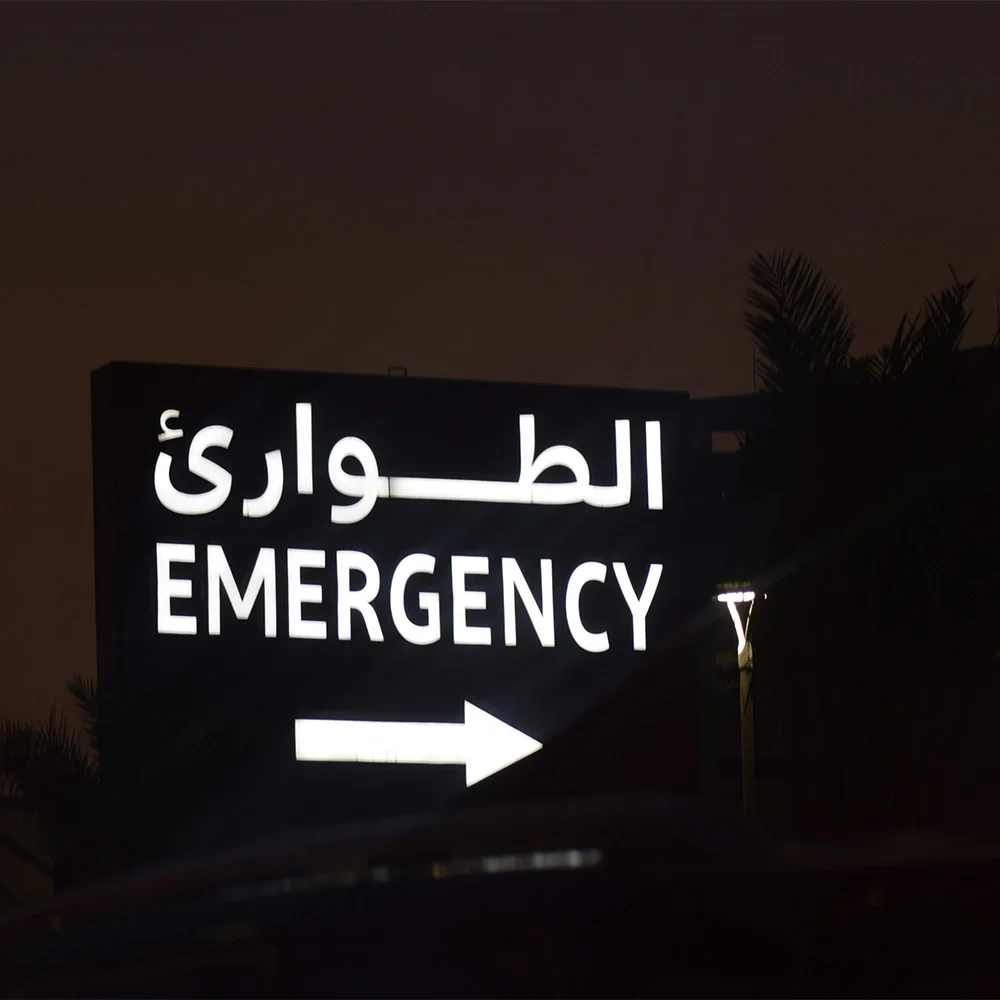
If you are experiencing a life-threatening emergency, call local emergency services right away. Things like chest pain, trouble breathing, severe bleeding, signs of a stroke, a serious fall, or a loss of consciousness all call for immediate care. Get help first, then contact Seven Corners Assist once you're safe, or ask a travel companion, hospital staff, or emergency personnel to call for you.
Tip: Emergency numbers vary by country. 112 works across the European Union, for example, while other countries use different numbers. Look up the number for each destination before you leave and save it in your phone.
Once you’ve made any necessary emergency calls, or if your situation is not life-threatening, follow these steps to get the right care and keep the financial side of your treatment moving.
Seven Corners Assist is available 24/7 to help insured travelers with urgent medical and travel assistance, wherever they are. Call 1-800-335-0611 (our toll-free number) or 1-317-575-2652 (our worldwide number) or email assist247@sevencorners.com. This team is trained to respond quickly and efficiently, with translators available in more than 130 languages.
To help the team move quickly, it helps to have this information ready:
Your policy or certificate ID number
Your current location, including the name of any hospital or clinic you're already at
A description of your symptoms or injury
Your passport
A phone number where Assist can reach you
Finding a doctor in an unfamiliar country is one of the most stressful parts of getting sick abroad. Seven Corners Assist takes that search off your plate.
The team gathers basic information about your medical concern and location, then researches medical resources in the area. Depending on your needs, that might be a hospital, emergency department, urgent care center, clinic, physician, or specialist. Assist then shares appropriate provider options with you and can help coordinate access to care when you need more support.
That's exactly what happened to Jean. After his ankle injury in Thailand, he had significant difficulty finding appropriate care on his own. The Assist team stepped in, identified a suitable provider, and helped him get the treatment he needed.
Keep in mind that local healthcare infrastructure, geography, language, and the urgency of your condition can all affect which options are available.
If you're visiting the United States, check your ID card to see if your plan uses a provider network. If a network is listed, you can search for a medical provider near you and schedule treatment. Network providers will bill Seven Corners directly, so you shouldn’t have to pay at the time of service. If no network is listed, you can visit any provider and submit a claim, or contact Seven Corners Customer Service for help finding one.
If you have our Travel Medical Including the USA, plan you also get unlimited Teladoc virtual visits for minor illnesses and everyday health concerns while you're in the U.S.
If you’re traveling outside of the United States, the best thing to do is call Seven Corners Assist. You can also begin exploring medical providers that have been vetted by local embassies with Wellabroad by Seven Corners.
Hospitals and clinics abroad handle billing in different ways. Depending on your provider and your plan, your care may be paid for in one of three ways:
Through a guarantee of payment (GOP). Assist issues a letter directly to the provider confirming that your treatment is covered and will be paid by Seven Corners. GOPs are only available for care received outside the United States. They are not issued for treatment within the U.S.
By the provider billing Seven Corners directly after your treatment.
By paying the provider yourself and then submitting a claim to Seven Corners for reimbursement review.
What is a guarantee of payment? A GOP is a document the Assist team sends to your medical provider when certain conditions are met. It confirms that your treatment and its associated costs are covered under your policy. For many travelers, a GOP means they can receive medical care without paying large bills upfront.
To review a GOP request, Assist needs:
Medical records showing your diagnosis, treatment needs, and plan of care
An estimated cost for that care
A completed claim form
A copy of your passport
Completing a claim form during an emergency can be difficult, so if you don’t have access to this form, simply call Seven Corners Assist to complete this form over the phone. Once everything is received, the team reviews whether the services are covered under your policy. If coverage is confirmed, Assist sends the GOP letter directly to the provider.
A few things are important to know:
A GOP is a courtesy service, not a policy requirement. Assist offers it when all conditions are met and the provider agrees to accept a GOP letter.
A GOP denial is not a claim denial. If a GOP can't be issued, the provider can still bill Seven Corners directly after treatment, or you can pay and submit a claim for reimbursement review.
Each provider sets its own billing practices. Most will bill Seven Corners directly or accept a GOP, but some require payment from the patient. Seven Corners can't dictate how a provider chooses to bill.
For Wendy, who was hospitalized in Nepal with an upper respiratory tract infection, a GOP meant the hospital could move forward with the care she needed while she was far from home. And when Dorothea suffered a stroke while leading a seminar in Switzerland, Assist worked with the hospital to provide a GOP that supported nearly a month of continuous care.
Whether you use a GOP or pay out of pocket, save everything! That includes itemized bills, receipts, medical records, prescriptions, and any paperwork from the hospital or clinic. Take photos as a backup. These documents make it easier for Assist to coordinate your care and for you to file a claim later. (Note that completing a claim form is not the same as filing a claim; the form is just one part of the process.)
Assist doesn't disappear after the first call. Throughout your care, the team communicates with your medical providers and, when appropriate, with your family back home. If your condition changes, or if your doctors recommend a transfer or a trip home, let Assist know right away so they can plan the next steps.
Sometimes the nearest hospital can't provide the care you need. When that happens, and when your plan includes emergency medical evacuation coverage, Assist can arrange to move you to a facility that can.
If you’ve reached a hospital, but it doesn’t have the specialists, equipment, or level of care your condition requires, an emergency medical evacuation to a different facility may be needed.
Evacuations are much less common within the United States, where advanced medical care is widely available. They come up more often in destinations where the specialists or equipment a patient needs may not be nearby.
Assist reviews every case with its medical directors, who are board-certified emergency medicine physicians. Together, they look at your condition, your location, your treatment needs, and what your current facility can provide. Assist may also request your medical records and speak directly with your treating doctor.
When an evacuation is medically necessary, Assist:
Finds an appropriate receiving facility that can provide the level and type of care you need, and confirms it can accept you before you're moved.
Coordinates between your doctors, connecting your current treating provider with the receiving facility whenever possible.
Arranges the safest method of transport based on your condition, location, and urgency. That could be a ground ambulance, a commercial flight with medical accommodations or an escort, a fixed-wing air ambulance, a helicopter, or a combination.
Stays in contact throughout, communicating with medical providers, transportation vendors, you, and your family when appropriate.
In particularly urgent cases, the clinical and logistical planning can happen at the same time so you can be moved as quickly as safely possible.
Every evacuation is different. Timing can depend on your medical stability, the urgency of your condition, your location, weather, transportation availability, whether the receiving facility can accept you, local infrastructure, and immigration or aviation requirements.
While in Timor-Leste, Mayra developed severe abdominal pain. She needed specialty care and an MRI to evaluate her condition, but neither was available locally. Assist coordinated a medical evacuation to Australia and worked with facilities in both countries on the transfer, billing, and guarantees of payment. Once she was treated and stable, Assist arranged her trip home to Hawaii.
Saleem was struck by a motorcycle while crossing the street in Istanbul. After reviewing his medical needs, Assist helped transfer him from the first hospital to a facility better equipped to provide the specialized neurosurgical care he required. Assist issued multiple guarantees of payment to support his ongoing treatment there.
If you're heading somewhere remote or taking part in adventure activities, get a quote or call our licensed agents to discuss which coverage may be best for your unique trip.
After a serious illness or injury, getting home isn't always as simple as booking a flight. You may need extra support to travel safely, and that's where medical repatriation comes in.
When your plan includes repatriation coverage, the Assist team can manage every part of your trip home, including:
Airline tickets and flight accommodations, such as upgraded seating to support an injury
Ground transportation to and from airports
Wheelchair assistance and porter services
Medical escorts, such as a registered nurse, or non-medical escorts, depending on your needs
Assist will ask for your medical records, a completed claim form, and a copy of your passport. The team then reviews your case with its medical directors to choose the safest, most clinically appropriate way to get you home. Throughout the process, Assist stays in contact with you, your family when appropriate, your medical providers, transportation vendors, and airlines.
Timing varies by case. It can depend on your medical stability, how quickly required documents are received, your doctor's recommendations, airline and transportation availability, requirements at your destination, and how complex the travel arrangements are.
Once Jean was cleared to travel after his ankle injury in Thailand, Assist coordinated his return home to Japan. Because of his limited mobility, the team secured upgraded seating and arranged ground transportation, wheelchair assistance, and porter services for each stage of the trip.
After nearly a month in a Swiss hospital following her stroke, Dorothea was stable and fit to fly. Assist arranged for a registered nurse to escort her on the journey home.
When Saleem was stable enough to leave the hospital in Istanbul but still needed significant medical support, Assist coordinated an air ambulance to bring him home to Pakistan. The operation required careful planning around complicated regional airspace and routing.
Medical emergencies abroad can include mental health crises, too. Jessica experienced a significant mental health crisis while traveling in Egypt and needed help returning to the United States for continued care and family support. Differences in how mental health is evaluated and treated locally made it harder to determine when she was ready to travel. The Assist team worked through those challenges, built a safe transportation plan, and arranged a registered nurse escort to accompany her to her father's home.
No one wants to think about losing a loved one while traveling. If it does happen, and when the plan includes this benefit, Assist offers logistical and payment support to help bring your loved one home.
The process starts with gathering documents from the next of kin, the treating medical providers, and local authorities when applicable. Because Seven Corners is an insurance company and not a funeral home, Assist can't legally make travel arrangements for human remains. Instead, the team acts as a liaison between the family and the funeral homes they choose, and often provides payment to the sending funeral home before transport to cover travel costs.
Timelines vary widely. Local legal requirements, autopsy or investigative procedures, official documentation, government or consular approvals, airline schedules, and international transport regulations can all affect how long the return takes.
A few minutes of prep before your trip can make a medical emergency abroad much easier to handle.
Log in to your Seven Corners account. Your account is where you can view your ID card, confirm plan information, and easily file claims. It's a good idea to be familiar with your account and have it easily accessible on your phone before an emergency happens.
Save Seven Corners Assist in your phone. Add 1-800-335-0611 (our toll-free number) and 1-317-575-2652 (our worldwide number) to your contacts, as well as our email address: assist247@sevencorners.com. Keep your ID card or policy number somewhere easy to find.
Email assist247@sevencorners.com and request a copy of the claim form. Claims should typically be submitted online, but should you need to complete a claim form to request a GOP, having this form handy is helpful.
Look up local emergency numbers for every country on your itinerary.
Take a photo of your passport ID page. In the event your passport is lost or stolen, it can take a long time for an embassy to issue an emergency passport. Having a photo can keep things moving while you wait.
Bring a list of your medications and medical conditions, including generic drug names, since brand names often differ between countries.
Share your itinerary and policy information with someone at home who can help contact Assist if you can't.
For more ways to get ready, see our pre-trip checklist.
Getting sick or hurt abroad is stressful, but you don't have to figure it out alone. With the right coverage, one call to Seven Corners Assist connects you with a team that can help you find care, work with your hospital on payment, and plan your safe return home.
Before your next international trip, make sure your plan includes the medical coverage and assistance services you need. Explore travel medical insurance or talk to a licensed agent to find the right fit for a worry-free trip.
Did you enjoy this blog? Get more articles like it before anyone else when you subscribe to our monthly newsletter, The Wayfinder.
This website and various social media updates provided by Seven Corners contain content, information, articles, videos, and links to websites created by third parties. Seven Corners, its owners, and its employees neither endorse nor are responsible for the accuracy, timeliness, or reliability of any third-party information, statements, opinions, or advice and are not liable for any loss, harm, or damage caused by your reliance upon them. Use of such information or the linked websites is entirely at your risk. Concerns regarding this third-party content should be directed to the third party. Seek professional advice, as appropriate, regarding your use of such information and websites.
Because the information on this website and in Seven Corners’ blogs and other social media is written and compiled using knowledge and information available at a certain point in time, it may become outdated. For that reason, information, events, legal requirements, and product changes (including benefits, limitations, exclusions, and services) may not be up-to-date, complete, or accurate at the point in time it is being read. Again, use of such information is at your risk.