The Wayfinder
Navigate Travel Like an Expert
Holiday travel is somehow one of the most looked-forward-to and dreaded parts of the season. Airports set new records every year, winter weather is unpredictable, and the pressure to make perfect memories can make a small hiccup feel like a disaster.
The good news is that most holiday travel stress is avoidable with a little planning. This guide covers everything you need, from when to book and which days to avoid, to what airlines actually owe you when things go wrong and how travel insurance can protect the money you put into your trip.
The best time to book holiday flights is by the end of October — we recommend locking in lodging even sooner. Waiting for a last-minute deal rarely pays off during peak season, and you risk ending up with nothing at all.
During typical travel times, buying about a month ahead works for domestic flights and three to four months ahead for international ones. For Thanksgiving, Christmas, and New Year's, stretch that timeline. Fares tend to climb steadily from late summer through the holidays, and it is rare to see prices drop in December.
A few ways to book smarter:
Set fare alerts early. Start watching routes in late summer so you know what a good price looks like before you buy.
Compare total cost, not just the fare. Seat selection and bag fees can erase a cheaper ticket. More on that in the money-saving tips below.
Choose nonstop flights when you can. Every connection is another chance for a missed flight or a bag that does not make it. If you must connect, leave a bigger buffer than you would the rest of the year.
Fly early in the day. Morning flights are less likely to be affected by delays that stack up as the day goes on.
For more ways to save, see our guide to scoring the best flight deals.
Popular destinations fill quickly. Vacation homes with enough bedrooms for the whole family, a table at the restaurant you have been dreaming of, and tickets to holiday shows can all sell out months ahead. Aim to book these by October as well.
If you are flexible and care more about price than the perfect room, you can sometimes find deals about a week out. Just be ready to adjust your plans and expectations.
The Sunday after Thanksgiving is the single busiest day to fly in the U.S. On Nov. 30, 2025, TSA screened about 3.13 million people, the most in the agency's history. Expect the same pattern in 2026.
| Holiday 2026 | Expect Crowds | Quieter Options |
| Thanksgiving (Thurs., Nov. 26) | Tues., Nov. 24; Wed., Nov. 25; Sun., Nov. 29 | Thanksgiving Day itself; Mon., Nov. 23; Mon., Nov. 30 |
| Christmas (Fri., Dec. 25) | Fri., Dec. 18 through Sun., Dec. 20; Wed., Dec. 23; Sun., Dec. 27 | Christmas Eve afternoon; Christmas Day |
| New Year's (Fri., Jan. 1, 2027) | Sat., Jan. 2, and Sun., Jan. 3 | New Year's Day; Mon., Jan. 4 |
The December rush is spread over a longer window than Thanksgiving, so crowds are less concentrated on any single day. That still does not mean an easy trip through the airport.
The simplest way to dodge the chaos is flexibility. Leave a day or two earlier, fly on the holiday itself, or squeeze out one more vacation day and come home on a Monday. It is less convenient, which is exactly why it tends to be cheaper and calmer.
REAL ID enforcement is now in place at U.S. airport checkpoints. If your driver's license is not REAL ID compliant, bring a passport or another TSA-accepted ID. Traveling internationally? Many countries require your passport to be valid for at least six months beyond your return date.
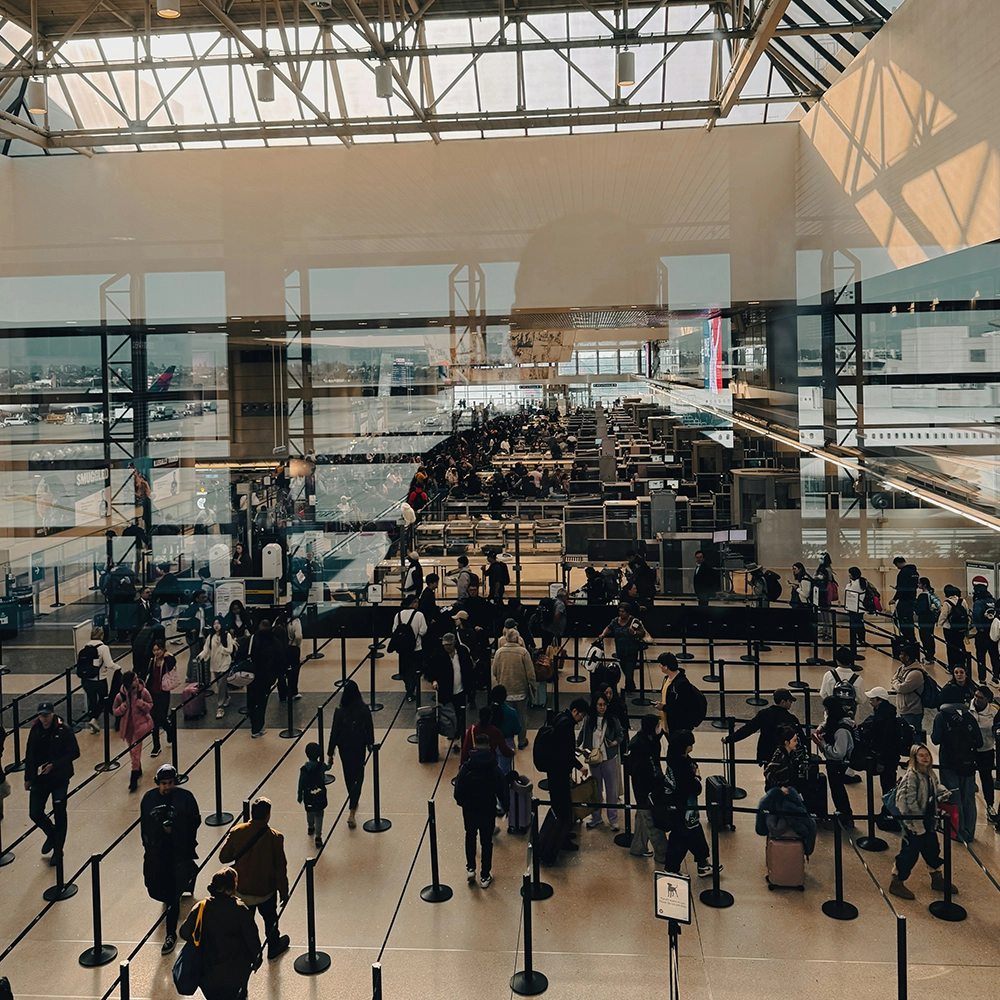
Security lines are at their longest during the holidays. TSA PreCheck can get you to your gate faster, and children 17 and under can go through with an enrolled parent or guardian. Clear is another option that uses biometrics to verify your identity, speeding up the first segment of the security screening process.
Factor checked bag fees into the total cost before you book. If you plan to check two bags, a fare class that includes them might cost nearly the same as a basic ticket plus fees. Flying carry-on only saves money and means there is no bag to lose.
Shipping presents straight to your destination keeps them out of your luggage and avoids an extra bag fee. If you do fly with gifts, keep them in your carry-on and leave them unwrapped, since TSA may need to inspect them. Check TSA's What Can I Bring? tool for food gifts like cookies or jam.
Arrive at the airport at least two hours before a domestic flight. If you must connect, leave a longer layover than you would the rest of the year. A missed connection on a sold-out holiday travel day can mean waiting until the next day for an open seat.
Driving instead? See whether you need travel insurance for your road trip.
Even the best plans meet a blizzard sometimes. Knowing your rights, and what to keep track of, makes a disruption much easier to recover from.
What you are owed depends on two things: how long the disruption lasts and whether the airline caused it.
Rebooking: If your flight is cancelled or significantly delayed, most airlines will rebook you on their next available flight at no additional charge, though no federal law requires it. For disruptions the airline caused, all 10 major U.S. airlines commit to free rebooking in their customer service plans, and DOT requires airlines to honor those commitments. If you are already at the airport, get in line and call customer service at the same time. Whoever answers first wins. And be kind to airline staff, who are having a hard day, too.
Refunds: Under the U.S. Department of Transportation's automatic refund rule, you are owed a cash refund if your flight is cancelled or significantly changed and you choose not to accept the alternative. A significant change includes a delay of three hours or more on a domestic flight or six hours or more on an international one. Refunds are due within seven business days for credit card purchases and 20 calendar days for other payment methods. You can also get your checked bag fee back if your bag is significantly delayed.
Meals and hotels (controllable delays only): U.S. law does not require airlines to pay for meals or hotels. But major U.S. airlines have committed, in their customer service plans, to provide meal vouchers when a delay they caused leaves you waiting three hours or more, and most also cover a hotel and ground transportation for an overnight disruption within their control. You can see what each airline promises on the DOT's Airline Cancellation and Delay Dashboard.
A controllable delay is one the airline caused, such as crew or staffing issues. Weather and air traffic control delays have never counted. Starting Oct. 19, 2026, a new DOT rule moves 10 more disruption types out of the controllable category, including unscheduled maintenance that cannot be deferred, removal of an unruly passenger, and medical emergencies. Your rebooking and refund rights do not change, but fewer delays will come with a free meal or hotel. When you are delayed, ask the agent what cause is being recorded.
Unlike the European Union, the U.S. does not require airlines to pay you extra cash for a delay. A refund only returns what you paid, and only if you choose not to travel.
For step-by-step help, check out what to do when your flight is cancelled.
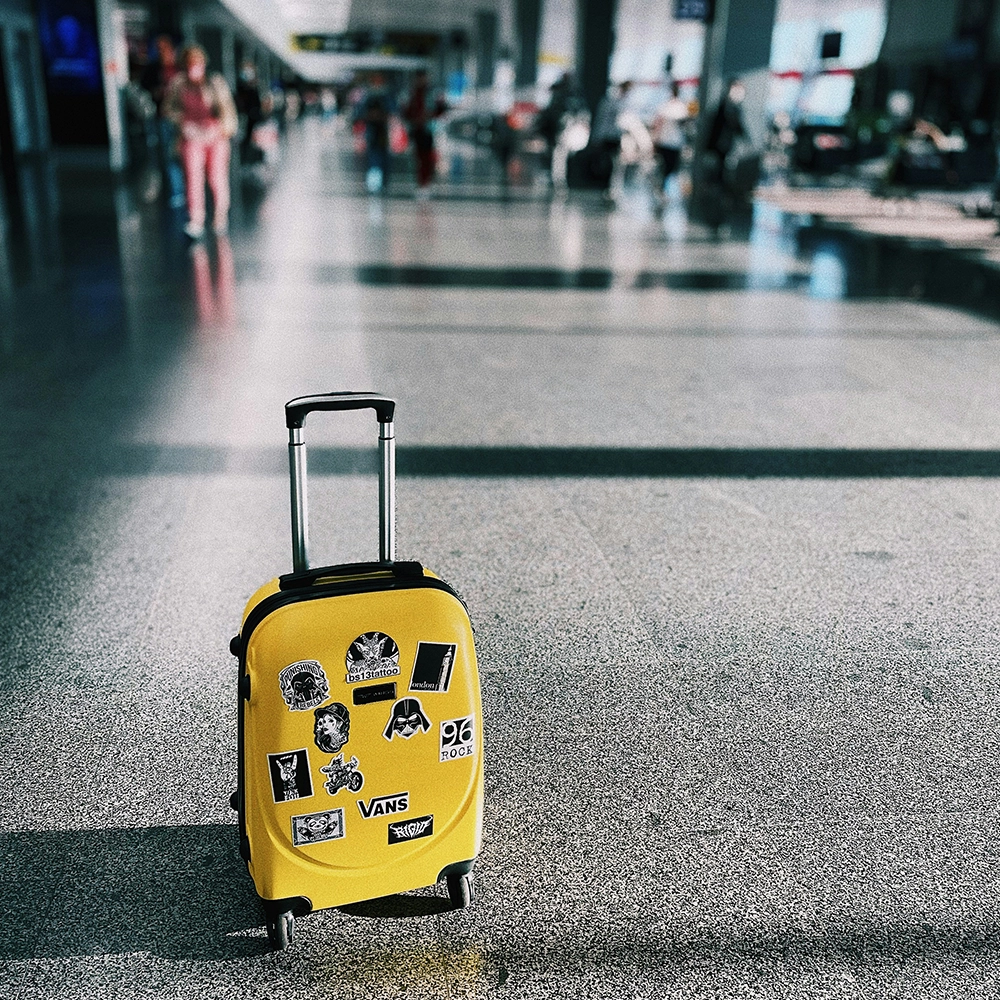
This one is super simple and can save you a lot of stress. Luggage that stands out is easier to find. Go beyond a ribbon on the handle with a bold color, pattern, or cover. A few more ways to protect your bags:
Use a tracker. A Bluetooth tracker tucked inside your suitcase lets you see where it is, even when the airline is not sure.
Take photos. Snap a picture of your bag and its contents before you leave. It speeds up a claim if you need one.
Keep essentials in your carry-on. Medications, chargers, a change of clothes, and important documents should stay with you.
Report a lost or delayed bag before you leave the airport. Get a file reference number and keep it handy.
When a delay or cancellation starts costing you money, save every receipt: meals, a hotel room, a rideshare, a toiletry kit, or a replacement flight on another airline. Whether you are seeking reimbursement from the airline or filing a travel insurance claim, receipts help you recover as much as possible. Snap a photo of each one in case the paper copy goes missing, and save emails or texts from the airline about the delay and its cause.
Airline commitments only go so far. They mostly apply to delays the airline caused, and they only cover your flight. Travel insurance can step in for the rest, including weather delays, illness, and the prepaid hotel or excursions you cannot get back.
| If this happens... | What the airline typically covers | What Seven Corners travel insurance can cover* |
| Blizzard delays or cancels your flight | Rebooking; refund if you choose not to travel. No meals or hotel, since weather is not controllable | Meals, lodging, and other reasonable expenses during a covered trip delay |
| Crew or staffing problem causes a long delay | Rebooking, plus meals or hotel per the airline's customer service plan | Additional covered expenses beyond the airline's commitment |
| You or a family member gets sick before the trip | Nothing, unless your fare is refundable | Reimbursement of prepaid, nonrefundable trip costs if you cancel for a covered reason |
| A delay makes you miss a nonrefundable hotel night, tour, or cruise departure | Nothing. Airlines only cover the flight | Covered prepaid costs lost to trip interruption or missed connection |
| Your checked bag is lost or delayed | Bag fee refund for a significant delay; limited liability for lost bags | Essentials while you wait, plus coverage for lost or damaged belongings |
| You get sick or hurt abroad | Nothing | Emergency medical care and 24/7 access to Seven Corners Assist |
*Coverage depends on the plan you choose and is subject to its terms, conditions, and exclusions.
Trip Protection plans can reimburse the prepaid, nonrefundable costs of your trip if you have to cancel or cut it short for a covered reason, like an illness or severe weather. They can also help cover expenses during a covered travel delay and protect your luggage. Plans also include travel medical coverage and access to 24/7 travel assistance if something goes wrong.
Sometimes the reason you no longer want to go is not on any list of covered reasons. Maybe a family disagreement has you rethinking Christmas at your in-laws', or plans simply shift. Standard trip cancellation coverage will not help there.
That is where optional Cancel for Any Reason (CFAR) coverage comes in. CFAR lets you cancel for any reason you wish and get back 75% of your prepaid, nonrefundable trip costs. It must be added when you buy your plan, within a set window after your first trip deposit, so decide early.
Your domestic health insurance may offer little or no coverage outside the U.S., and Medicare generally does not cover care abroad. Travel Medical plans can cover emergency medical care if you get sick or injured on an international trip, from a winter flu in a European Christmas market to a fall on the slopes.
Buy it soon after you make your first trip payment. Timing matters more during the holidays than at almost any other time of year, for three reasons.
Winter storms become "foreseeable" fast. Travel insurance covers the unexpected. Once a winter storm is named or widely forecast, it is a known event, and a plan purchased after that point generally will not cover disruptions it causes. Buying early protects you before the forecast turns.
Some benefits have a purchase window. Optional Cancel for Any Reason coverage, and in many plans the waiver for pre-existing medical conditions, must be added within a set number of days after your first trip deposit. Wait too long and those options are off the table.
Cancellation coverage starts when you buy. If someone in your family gets sick in early December and you bought your plan in November, you may be covered. If you had not bought one yet, there is nothing to claim.
It might cover part of your trip, but it usually leaves gaps. Before you rely on it, read your card's benefits guide and check these points:
What you paid with it. Card benefits typically apply only to costs charged to that card. A hotel booked with points or a rental paid by a relative may not count.
Coverage limits. Trip cancellation and delay benefits often have lower per-trip limits than a dedicated plan, which matters when a holiday trip for a whole family adds up.
Medical care abroad. Most cards offer little or no emergency medical coverage, and few include medical evacuation, which can be the most expensive part of a crisis overseas.
Cancel for Any Reason. Credit cards generally do not offer this.
A travel insurance plan can fill the gaps your card leaves, and a licensed agent can help you compare.
A well-documented claim is a faster claim. Gather these as things happen, not after you get home:
Proof of the delay or cancellation. Ask the airline for written confirmation of the length and cause.
Any receipts for added expense. Meals, lodging, transportation, and essentials you bought while your bag was missing.
Your original trip costs. Booking confirmations and payment records for flights, hotels, tours, and anything else you prepaid.
Proof of any refunds or credits. What the airline, hotel, or tour operator already gave back.
A baggage report or medical records, if your claim involves a lost bag or an illness or injury.
With all of these pieces, you’ll be ready to file a claim in your Seven Corners account. Need help during your trip? Call Seven Corners Assist, available 24/7. When you are ready to file, simply log in to your Seven Corners account.
The holidays are about the people you are traveling to see. A little planning and the right protection let you focus on them... instead of your flight status. Get a quick quote or talk with one of our licensed agents to find the right coverage for your holiday trip. Wherever you’re headed, we're in your corner.
Did you enjoy this blog? Get more articles like it before anyone else when you subscribe to our monthly newsletter, The Wayfinder.
This website and various social media updates provided by Seven Corners contain content, information, articles, videos, and links to websites created by third parties. Seven Corners, its owners, and its employees neither endorse nor are responsible for the accuracy, timeliness, or reliability of any third-party information, statements, opinions, or advice and are not liable for any loss, harm, or damage caused by your reliance upon them. Use of such information or the linked websites is entirely at your risk. Concerns regarding this third-party content should be directed to the third party. Seek professional advice, as appropriate, regarding your use of such information and websites.
Because the information on this website and in Seven Corners’ blogs and other social media is written and compiled using knowledge and information available at a certain point in time, it may become outdated. For that reason, information, events, legal requirements, and product changes (including benefits, limitations, exclusions, and services) may not be up-to-date, complete, or accurate at the point in time it is being read. Again, use of such information is at your risk.